Client: Capiau Recycling
Raising the bar step-by-step
Location: Lokeren near Antwerp, Belgium
Installed Machine: Zato Blue Devil and Blue Shark
Results: Increased processing capacity, higher aluminium quality, lower energy consumption, safer operations, time and space savings, durable and reliable machines, responsive customer support.
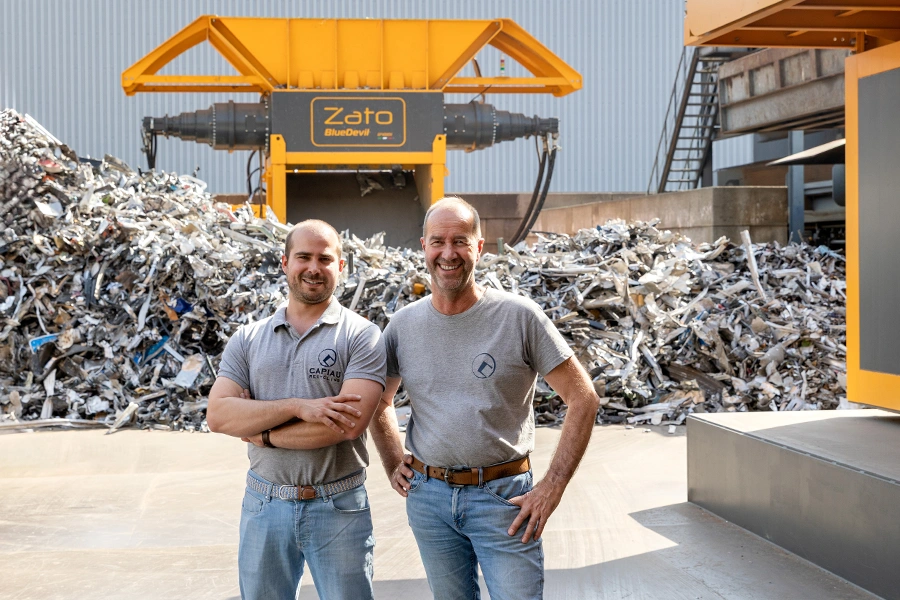
Aluminium recycler Capiau: ‘Raising the bar step-by-step’
Based in Lokeren near Antwerp, Belgium, Capiau Recycling has grown into one of the country’s largest aluminium recyclers. To strengthen its position in a fast-changing market and boosted by ever-growing demand for higher quality scrap, the company has recently invested in new shredding technology and other enhancements, as co-owner Gio Capiau explains.
Capiau Recycling was founded in the early 90s by Gio Capiau’s father Wim and began in large-scale demolition, industrial clearances and shipbreaking. Wim acquired a piece of land in Lokeren and developed it into a collection site where local scrap dealers could bring materials.
As business grew, the focus moved from demolition towards running a dedicated scrap yard. By 1999, Capiau was one of the first recyclers in Belgium to use a mobile shear, which supported growing demand for local ferrous scrap collection. Ten years on, the company expanded further with the installation of a 1 000-tonne stationary shear.
Primary focus: aluminium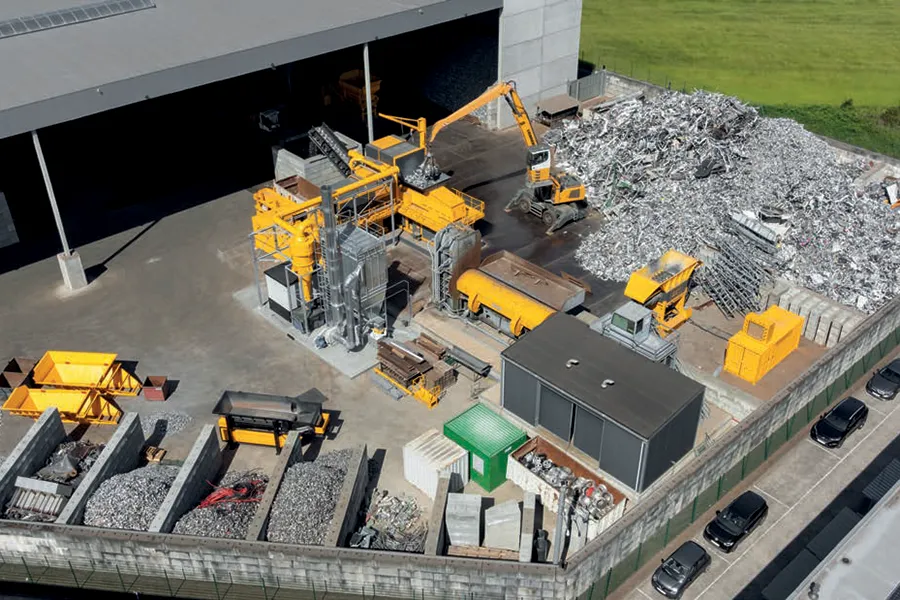
Around 20 years ago, Capiau turned to aluminium recycling. ‘Over time, this has become our primary focus,’ says Gio. ‘In June 2025, we stopped purchasing ferrous scrap altogether. Now we’re almost entirely into aluminium, with a small share of other non-ferrous materials expected to be phased out soon.’
Sourcing and processing
Capiau sources aluminium scrap within a 400-kilometre radius of Lokeren, covering Belgium, the Netherlands, western Germany and northern France. Suppliers include local yards, industries and recyclers who separate non-ferrous fractions from waste streams.
The company handles between 1 500 and 2 000 tonnes of aluminium scrap per month. Material includes mixed aluminium, profiles, castings and various grades such as Zorba.
Investing in shredding technology
Capiau’s commitment to innovation led to the installation of its first major aluminium line in 2019. However, slow-speed shredders proved inefficient due to high wear and limited capacity. Seeking a more durable and productive solution, the company invested in a new system, from Zato.
Safety and capacity boost
The new setup includes both a pre-shredder (Zato Blue Devil) and a hammer mill (Zato Blue Shark). Gio: ‘The pre-shredder addresses, among other things, safety concerns – particularly the risks of lithium batteries and gas cylinders – by reducing the chance of explosions and handling unshreddables before material reaches the hammer mill. It also significantly increases capacity.’
The hammer mill delivers high throughput and durability, ensuring efficient processing. Together, the machines improve safety, boost overall productivity and reduce energy use.
‘Energy-wise, the new system is much more efficient,’ enthuses Gio. ‘In the past, we often had to shred material three or four times. Now, the pre-shredder consumes very little power and the hammer mill needs only one run per batch. This saves energy but also time and space.’
Raising quality standards
With European smelters and end users increasingly demanding higher-quality recycled aluminium, advanced downstream processing is required. That’s why Capiau’s investment covers a total solution of Zato’s pre-shredder and hammer mill combined with the latest sorting technology. ‘This ensures that we can deliver cleaner fractions and meet the industry’s rising standards,’ says Gio.
The company has invested EUR 8 million in the new shredding equipment and an upgraded downstream sorting line. The latter will be completed by October 2025.
Partnership with Zato
Capiau’s decision to partner with Zato was strongly influenced by recommendations from colleagues in the recycling industry. ‘I called Zato’s sales director Omar Della Gaspera and within a week he visited our yard to see if they could help us. Long story short: they could and we connected very well.’
Beyond the quality of the equipment, the recycler highlights Zato’s customer service as a key differentiator. ‘At Zato, they’re very proactive in finding the right approach. They don’t just deliver one-size-fits-all machines, but a complete solution, tailored to the customer’s needs. And that’s what you want as a recycler.’
What’s more, their after-sales support is fantastic, notes Gio. ‘We even have a WhatsApp group with their team. If we have a problem, they respond with solutions within minutes. They don’t leave you on your own and this really sets them apart from other machinery providers.’
Looking ahead
In the next five to ten years, Capiau Recycling aims to set the benchmark for aluminium recycling in the Benelux region. The goal is to be recognised not only by suppliers, who bring in scrap, but also by foundries that rely on consistent, high-quality recycled aluminium. ‘We want to be known as the place to bring aluminium (production) scrap and, equally as a trusted supplier for melting companies,’ says Gio. ‘Step by step, we continue to raise the bar.’
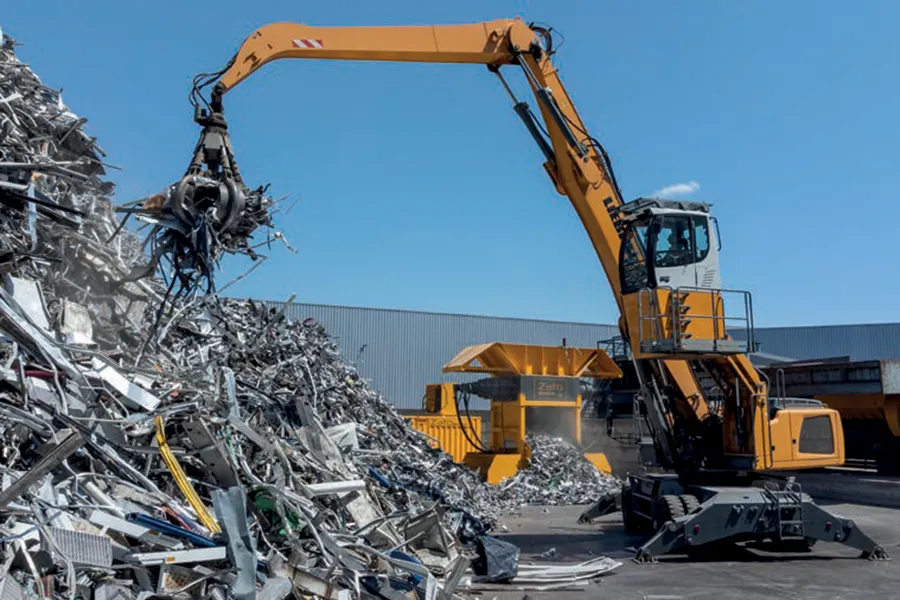
Blue Devil: engineered pre-shredding shaping the process
Upstream of Capiau’s aluminium processing plant, Zato’s Blue Devil twin-shaft pre-shredder plays a vital role in ensuring a clean and efficient flow of material to the hammer mill.
Known for its powerful, low-speed, high-torque design, the Blue Devil has been designed to efficiently process a broad range of scrap materials. At Lokeren, however, it’s being applied to process aluminium.
Controlled force
Whether dealing with baled or cast aluminium or extrusions, the Blue Devil pre-shreds material with a controlled and consistent force. With the help of 60 blades on two counter-rotating shafts, the aluminium is sheared rather than torn which makes a crucial difference when processing lighter, non-ferrous materials.
The result is a steady, dense and uniform stream of pre-shredded material which has been optimised to obtain maximum efficiency from further processing in the hammer mill.
Maximising performance
While the Blue Devil is capable of processing more complex and heavier waste streams – from entire cars to laser-cut plates and even moderately heavy 10mm steel – the installation is focused entirely on maximising the aluminium output.
Pre-shredding ensures potential hazards such as enclosed vessels or compacted air pockets are neutralised by virtually eliminating any risk of explosions during processing in the hammer mill.
Other benefits of pre-shredding with the Zato Blue Devil include: elimination of power peaks within the hammer mill which saves significantly on energy consumption; less wear and tear of consumables within the mill’s shredding chamber; and preventing unshreddables from causing damage and downtime.
Low noise, high throughput
The slow-rotating, high-torque, cutting force of the Blue Devil is surprisingly quiet considering its size and high throughput. Its cutting efficiency translates into a highly productive system that moves material smoothly and safely from the yard into the heart of the recovery line. In short, it does more than just shred – it conditions the aluminium so the rest of the line can extract maximum value from every tonne being processed.
Blue Shark: Precision shredding for clean aluminium recovery
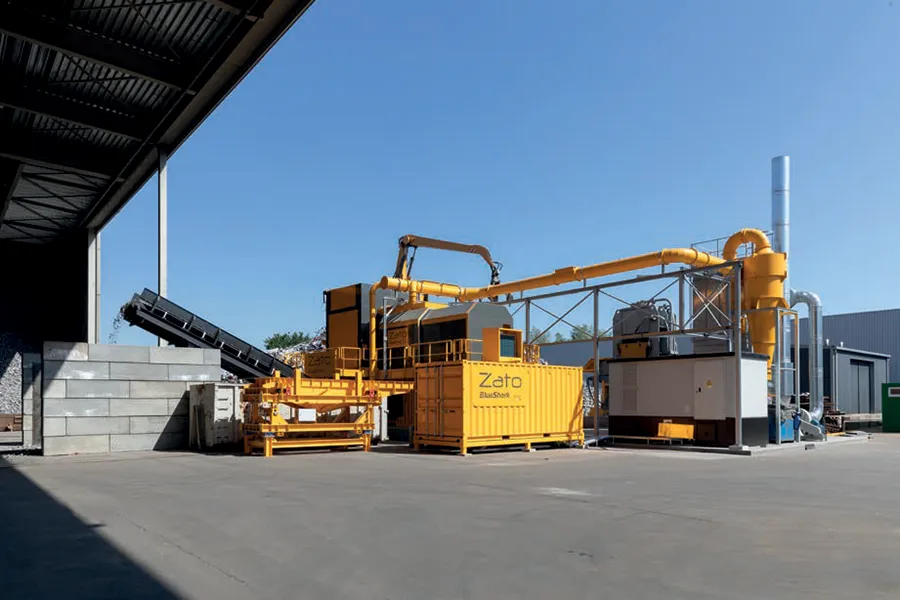 Once the aluminium has been pre-conditioned, it passes to the next phase: final shredding with Zato’s Blue Shark hammer mill. At Capiau Recycling, the mill was configured specifically to process aluminium – and only aluminium – which allows for a series of tailored choices to ensure maximum output quality and recovery efficiency.
The Blue Shark guarantees high-quality aluminium free from any minor residuals or contaminants and prepares the scrap for efficient separation downstream.
Saving energy
A key component is the fully automated pusher, which measures material into the mill chamber at a steady rate. This prevents sudden load fluctuations that could cause overfeeding or unnecessary wear.
The pusher works in harmony with the rotor and the main drive, ensuring the material flows continuously across the working zone without interruption.
Having the feeding pusher connected to the main drive also helps to maintain consistent motor load and power consumption, enhancing energy efficiency and reducing idle power consumption and current peaks.
Robust shredding body
The rotor itself is housed in a robust shredding body, pre-mounted on a reinforced frame designed for easy installation – no deep foundations or major civil works required. Anti-vibration systems are fitted between the mill and its support base to dampen mechanical stresses and minimise environmental disturbance.
The grid configuration plays a decisive role in determining output size and processing behaviour. In this case, a 90 mm setting has been chosen to match the exact requirements of the downstream separation technology. This guarantees high-quality aluminium free from any minor residuals or contaminants and prepares the scrap for efficient separation downstream.
Designed and assembled entirely in-house by Zato, the Blue Shark is delivered pre-tested and calibrated, allowing for quick on-site commissioning. It’s a machine that brings together physical strength, mechanical precision and precise process control.